
CAS-TWAS CEEID and Kazakhstan National Agrarian Research University Hold Bilateral Symposium to Deepen Agricultural and Global Health Cooperation
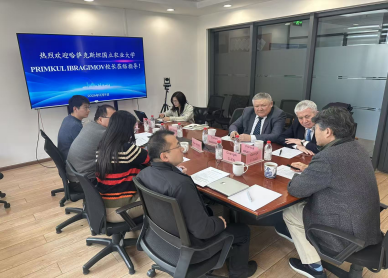
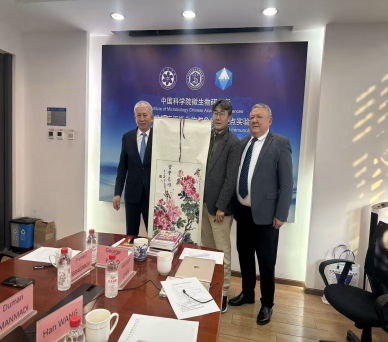
A pivotal bilateral symposium between the CEEID and Kazakhstan National Agrarian Research University (KNARU) was successfully held at the Institute of Microbiology of Chinese Academy of Sciences on March 8, 2026. The event aimed to forge closer scientific and technological cooperation ties under the Belt and Road Initiative, focusing on collaborative research in emerging infectious diseases, global health, and agricultural biotechnology. Prof. George F.GAO, Director of CAS–TWAS Centre of Excellence for Emerging Infectious Diseases and Perimkul Ibragimov academician, First Vice-President of KNARU, led the discussions on behalf of the two sides. The symposium was organized and coordinated by Dr. Likui WANG, Secretary of the CAS–TWAS Centre of Excellence for Emerging Infectious Diseases (CEEID).
The two parties engaged in in-depth and constructive exchanges around five core cooperation topics, reaching broad consensus on deepening bilateral collaboration in multiple key fields. First, the participants thoroughly discussed the joint research and cooperation plan for the lumpy skin disease vaccine in Kazakhstan, aiming to combine the technological advantages of both sides to address the threat of lumpy skin disease to the animal husbandry industry in Kazakhstan and the surrounding regions, and safeguard the development of the animal husbandry economy. Second, the two sides agreed to jointly initiate the establishment of a Belt and Road One Health Research Center at KNARU, building a high-level academic and research platform for interdisciplinary research on global health, human-animal coexistence and disease prevention, and promoting the sharing of resources and achievements in the One Health field along the Belt and Road.
Third, the symposium confirmed the preparation plan for laboratory at KNARU, which will take full advantage of Prof. Prof. George F.GAO’s academic influence and research achievements in the field of infectious diseases, gather outstanding scientific research talents from both China and Kazakhstan, and carry out cutting-edge research on animal infectious diseases, vaccine development and other related fields. Fourth, the two parties deliberated on the construction plan for hosting the 2nd Belt and Road International Symposium on Global Health and Zoonoses in Kazakhstan, aiming to build the symposium into a key academic exchange platform for global health research in Central Asia, facilitating academic dialogue and technical cooperation among researchers from various countries and regions. Fifth, the two sides attached great importance to youth talent cultivation and short-term academic exchanges, and agreed to launch a series of exchange programs such as scholar visits, joint training of postgraduates and academic seminars, laying a solid talent foundation for the long-term cooperation between the two institutions.
Prof. George F.GAO emphasized in his speech that the cooperation between CEEID and KNARU is an important practice of the Belt and Road Science, Technology and Innovation Cooperation, and the fields of global health and animal infectious disease prevention are the key directions of bilateral cooperation with great potential. He pointed out that the establishment of the One Health Research Center and the Academician Laboratory will effectively promote the integration of scientific research resources between China and Kazakhstan, and provide strong technical support for the prevention and control of major infectious diseases and the sustainable development of animal husbandry in the region.
Perimkul Ibragimov academician expressed his sincere appreciation for the positive efforts made by CEEID in promoting bilateral cooperation. He noted that KNARU has always attached great importance to cooperation with Chinese scientific research institutions and universities, and the consensus reached at this symposium will further deepen the pragmatic cooperation between the two sides in multiple fields. He said that KNARU will fully support the construction of the Belt and Road One Health Research Center, and actively promote the implementation of various cooperation plans to achieve mutual benefit and win-win results.
Dr. Likui WANG stated that CEEID will continue to play a bridge and link role, actively coordinate the relevant resources of CAS-TWAS CEEID and KNARU, follow up and promote the implementation of the cooperation consensus reached at the symposium, and ensure that various cooperation projects are put into practice as soon as possible, so as to contribute to the deepening of scientific and technological cooperation between China and Kazakhstan and the development of global health cause under the Belt and Road Initiative.
This bilateral symposium has laid a solid foundation for the in-depth cooperation between CEEID and KNARU in the fields of agricultural science, global health and infectious disease prevention. The series of cooperation plans confirmed at the meeting will not only promote the exchange and integration of scientific and technological achievements between the two countries, but also provide a new impetus for the construction of the Belt and Road Science, Technology and Innovation Community, and contribute to safeguarding regional public health security and the high-quality development of the agricultural and animal husbandry industry.
附件:
