The team led by Academician Gao Fu and Wang Qihui at the Institute of Microbiology has made progress in the research of therapeutic antibodies for the monkeypox virus.
Recently, the research team led by Academician Gao Fu and Wang Qihui at the Institute of Microbiology, Chinese Academy of Sciences, published a research paper titled "Two noncompeting human neutralizing antibodies targeting MPXV B6 show protective effects against orthopoxvirus infections" in Nature Communications. This study provides two promising candidate monoclonal antibodies for the treatment of monkeypox and other orthopoxvirus infections.
The monkeypox virus (MPXV) has posed a threat to global public health, yet effective treatment methods are still lacking. Although vaccines have been approved for the prevention of monkeypox, recent real-world data indicate their limited effectiveness. Monoclonal antibodies are a potent antiviral treatment approach; however, there is no data on their efficacy against monkeypox in humans, whether for monoclonal antibodies or vaccinia immune globulin (VIG). Therefore, there is an urgent need to develop treatment strategies that can effectively combat MPXV.
MPXV has two different infectious particles, intracellular mature virions (IMV) and extracellular enveloped virions (EEV), which have different surface antigens. Among them, L1, A27, H3, D8 on IMV and B5, A33 (protein names as named in VACV) on EEV have been proven to be important immunogens. Notably, antibodies targeting B5 in VIG play a major role in the neutralizing ability of VIG against EEV, indicating that B5 is an important target for antibodies that exert EEV neutralizing activity in humans. Therefore, this study focuses on B6, which is homologous to VACV B5 in MPXV, for antibody research.
This study first evaluated the pre-existing antibody levels against the MPXV B6 antigen protein in vaccinia vaccine recipients born before the end of the smallpox vaccination program. Then, two monoclonal antibodies, hMB621 and hMB668, were identified and isolated from one of the recipients, targeting different antigenic epitopes on the B6 protein. Binding experiments demonstrated that both monoclonal antibodies exhibited broad binding capabilities to B6 and its homologous proteins in vaccinia virus (VACV), variola virus (VARV), and cowpox virus (CPXV). Neutralization experiments proved that these two antibodies showed potent neutralizing effects against VACV (Figure 1). Animal in vivo antiviral experiments showed that both monoclonal antibodies, administered via intraperitoneal injection, exhibited effective in vivo protection against VACV (Figure 2). Additionally, the study resolved the complex structure of B6 and hMB668, revealing for the first time the structural characteristics of B6 and the binding epitope of the antibody.
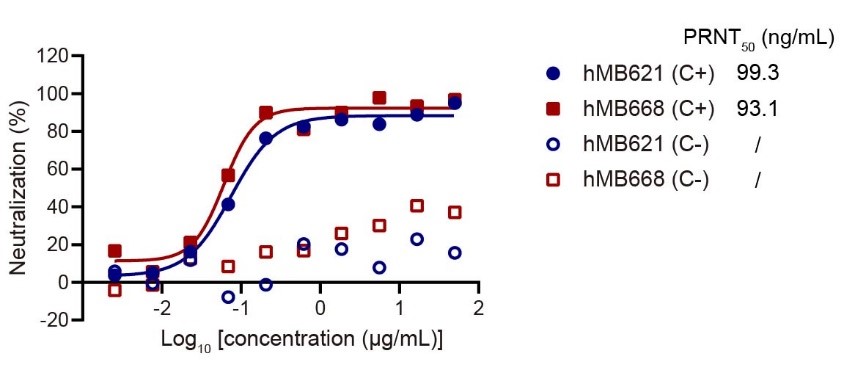
Figure 1. Antibody in vitro neutralization effect
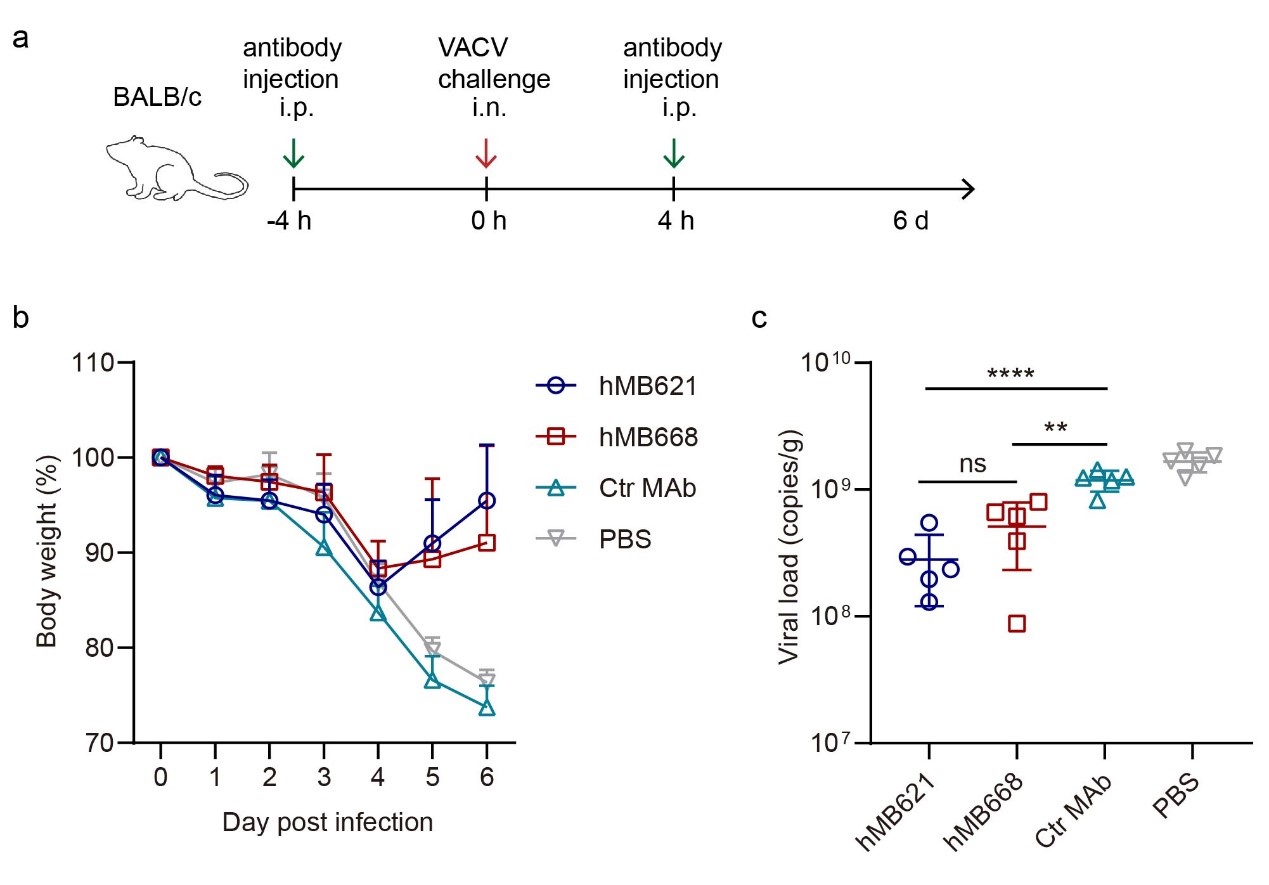
Figure 2. In vivo protective effect of antibodies
Runchu Zhao, Research Assistant of Institute of Microbiology, Chinese Academy of Sciences (IMS), Lili Beer, Assistant Researcher of IMS, Junqing Sun, PhD student of IMS and Shanxi Agricultural University (SAU), and Dezhi Liu, Master student of IMS and Anhui University (AU), were the co-first authors of the paper, and Qihui Wang, Researcher of IMS, was the corresponding author of the paper. We thank Mr. Chen Zhihai, Director of Beijing Ditan Hospital, for providing blood sample support. This study was financially supported by the National Key Research and Development Program of China, the National Natural Science Foundation of China, and the Program for Stable Support of Young Teams in Basic Research Areas of the Chinese Academy of Sciences.
Link to the paper: https://www.nature.com/articles/s41467-024-48312-2
DOWNLOAD: