
China and Uzbekistan Deepen Bilateral Research Collaboration in Microbiology and Life Sciences via CAS-TWAS
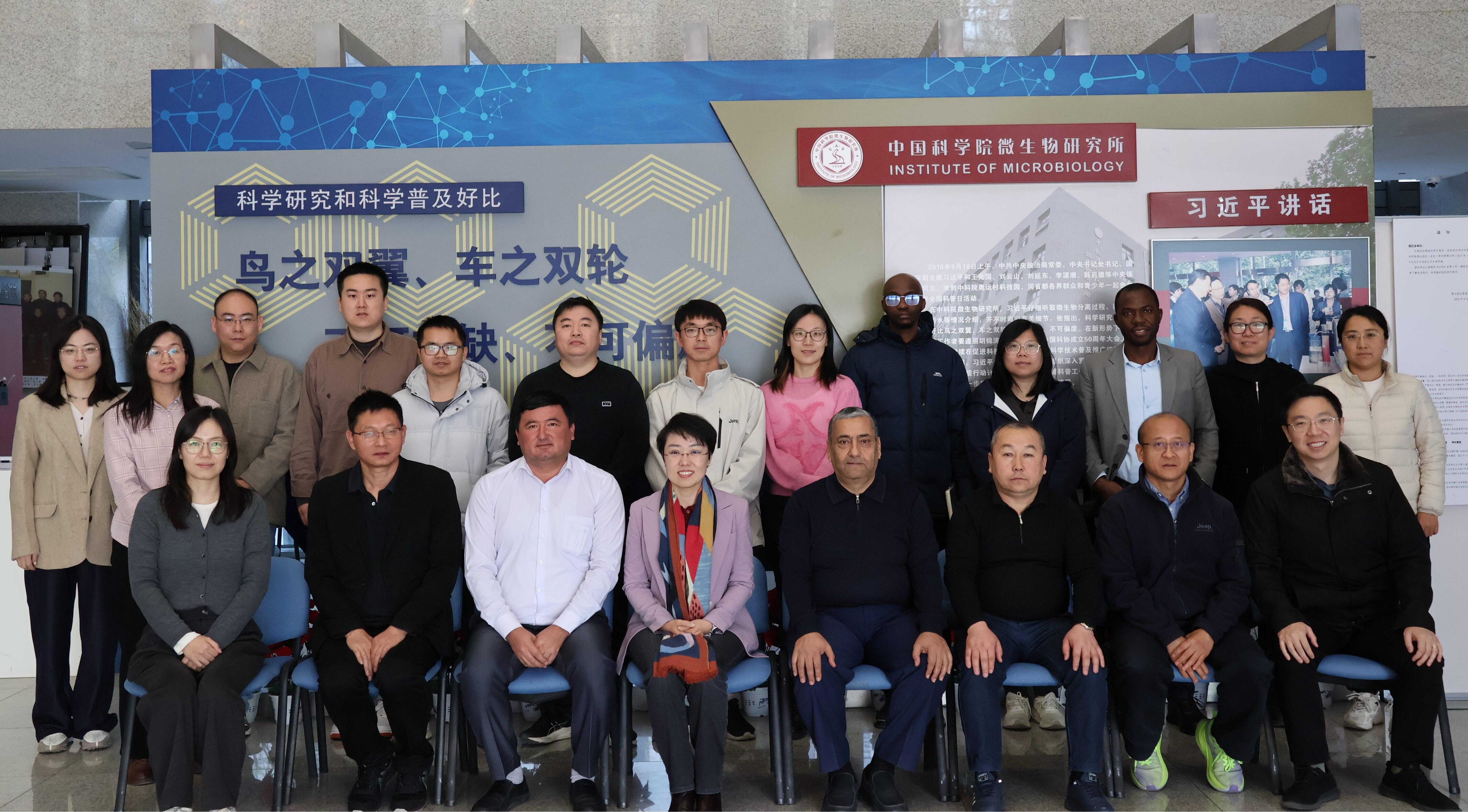
November 30,2025,The Institute of Microbiology,Chinese Academy of Sciences (IMCAS),hosted the China–Uzbekistan Bilateral Cooperation and Exchange Conference today,bringing together leading scientists from both countries to deepen collaboration in microbiology,infectious diseases,environmental science,and biotechnology. The meeting was organized by the CAS–TWAS Centre of Excellence for Emerging Infectious Diseases (CEEID).
The event,held at IMCAS in Beijing,convened experts from the Chinese Academy of Sciences and Samarkand State University to discuss frontier scientific challenges,exchange research progress,and explore new opportunities for joint projects. The conference marks an important step in strengthening research ties and advancing scientific innovation between China and Uzbekistan.
The meeting opened with welcome remarks from Prof. Qihui Wang,Deputy Director-General of IMCAS,who emphasized the long-standing friendship between the two countries and highlighted the strategic significance of deepening cooperation in microbiology and emerging infectious diseases. Prof. Wang also presented an overview of IMCAS, outlining its research strengths in pathogen biology, immunology, and global health. Representing Uzbekistan, Prof. Muhtor Nasirov, Samarkand State University discussed carbon sequestration intensities in Uzbekistan’s drylands, highlighting opportunities for microbiology research in Uzbekistan. His presentation underscored the need for joint research on environmental microbiology and sustainable land management. Researchers from both sides presented recent advances in their respective fields, opening avenues for cross-disciplinary cooperation. These exchanges showcased complementary strengths in microbiology,public health,plant and soil microbiology,and biophysiological research areas with strong potential for bilateral initiatives.
During the discussion session,both sides expressed a strong commitment to: Establishing joint research programs in microbiology,infectious diseases,and environmental microbiology.
Developing talent-training mechanisms,including exchange visits,joint workshops,and student programs. Co-building shared laboratories and technical platforms,such as pathogen surveillance,microbial genomics,and vaccine R&D. Enhancing data sharing and joint field studies in Central Asian ecosystems and agricultural microbiology. Expanding collaboration under TWAS and international scientific frameworks.
Participants affirmed that strengthened China–Uzbekistan collaboration will contribute to regional health security,sustainable development,and scientific innovation.
附件:
